
A Baby Step Adoption is an adoption agency operating within a two-sided marketplace, with families looking to adopt on one side, and expectant mothers looking for support on the other side. Like any two-sided market, success depends on maintaining the right balance between supply and demand, and when that balance shifts, marketing strategy has to shift with it.
When we first began working with them, our focus was on strengthening their existing paid search efforts and improving lead flow. We built multiple digital ad campaigns to support that goal, and initially, the results were strong. Lead volume increased, engagement was healthy, and performance metrics suggested the campaigns were doing what they were designed to do.
Over time, however, their business needs evolved. While the campaigns continued to attract adoptive families, the volume of birth-mother inquiries was not keeping pace with demand. The issue was not traffic or visibility. It was the audience. That realization prompted a deeper look at what the campaigns were actually doing.
Analyzing the Search Ad Data
Rather than making surface-level adjustments, we dug in and analyzed campaign performance in detail to understand who was responding, how they were finding the agency, and why they were converting.
What we found was telling. A significant portion of the inquiries were coming from adoptive families, and some were triggered by completely unrelated searches, including pet adoption. From a platform perspective, the campaigns were driving engagement efficiently, but from a business perspective, the majority of leads were not aligned with our client’s most immediate need. The campaigns looked successful on the surface, but were strategically misaligned upon closer inspection.
This misalignment became even clearer when we looked at cost metrics beyond platform-level averages. While overall cost per acquisition appeared favorable, the cost to generate a qualified birth-mother lead was disproportionately high.
CPA before changes (January–June 2025)
- Total leads: $43.14 CPA
- Qualified birth-mother leads: $937.17 CPA
At face value, these numbers could easily be misinterpreted as strong performance. In reality, they revealed a high cost-to-quality ratio that was not sustainable given the client’s goals.
The underlying issue was not bidding strategy or budget allocation, but rather how Google understood the business. Because the client was positioned broadly as an adoption agency, Google consistently categorized the campaigns within a general adoption context. That classification pulled in a wide range of searches and audiences, many of which were irrelevant or only partially relevant. While this overlap initially made sense for a two-sided marketplace, it became a liability once the client needed to prioritize birth-mother inquiries.
At that point, incremental optimizations were no longer enough. To change outcomes, we had to change how the platform interpreted intent. Basically, we needed to retrain Google.
Optimizing Our Paid Search Strategy
Once we understood where the misalignment was occurring, we moved beyond small tweaks and rebuilt the client’s search ad campaigns with a singular focus: birth mothers actively seeking adoption support. This meant rethinking the broader paid search and digital marketing strategy, not just individual campaigns.
This required restructuring campaigns from the ground up, refining ad messaging, and aligning landing page content so there was no ambiguity about who the message was for or what action the user should take. The goal was not just to drive conversions, but to drive the right conversions in a way that was measurable and repeatable.
We conducted keyword research to identify how birth mothers actually search for help, rather than relying on industry-standard adoption terminology. That language was then applied consistently across ads, landing pages, and broader digital touchpoints to create continuity and clarity for both users and platforms.
To further strengthen campaign intelligence, we introduced dynamic conversion forms that differentiated lead types at the point of inquiry. This gave us a clearer feedback loop and allowed us to optimize campaigns around the specific conversions the client needed, rather than treating all leads as equal.
In addition, because the client operates across licensed states, geographic performance was a critical variable to consider. After the new campaign structure was in place, we analyzed regional data to identify where qualified birth-mother inquiries were most concentrated. Based on those insights, we reallocated spend toward markets that were more likely to produce better leads. This allowed the campaigns to build efficiency faster while reducing wasted spend in lower-performing regions.
Success: More Qualified Birth-Parent Leads
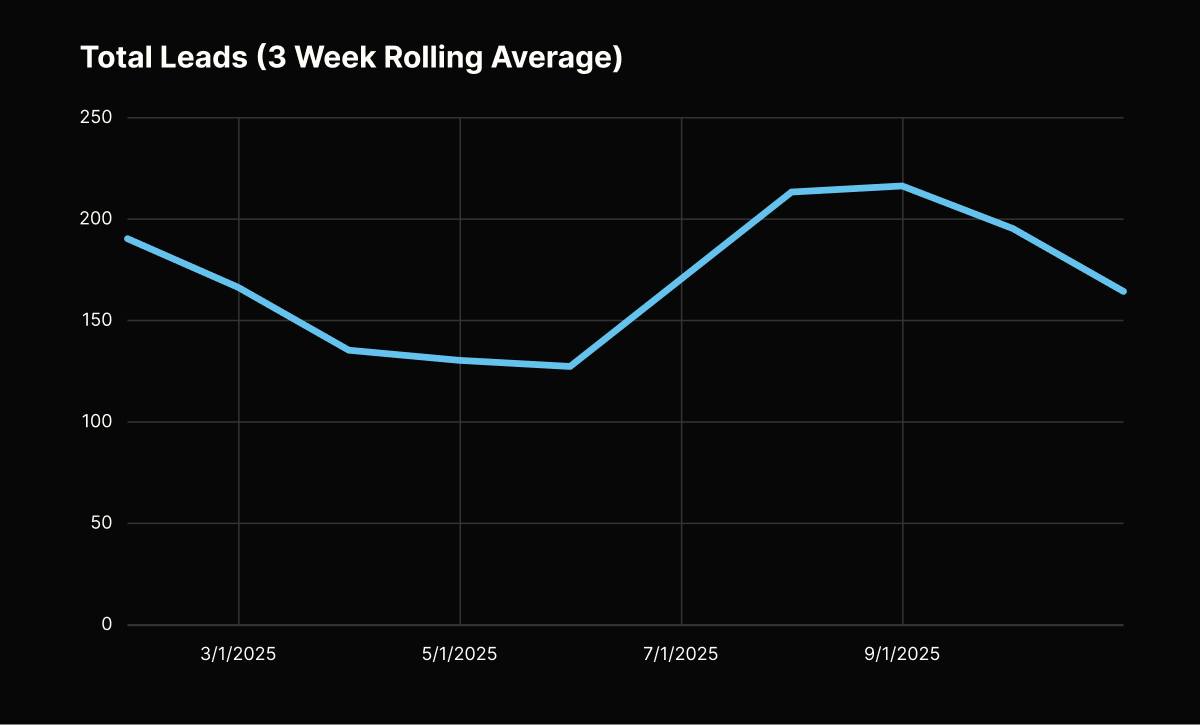
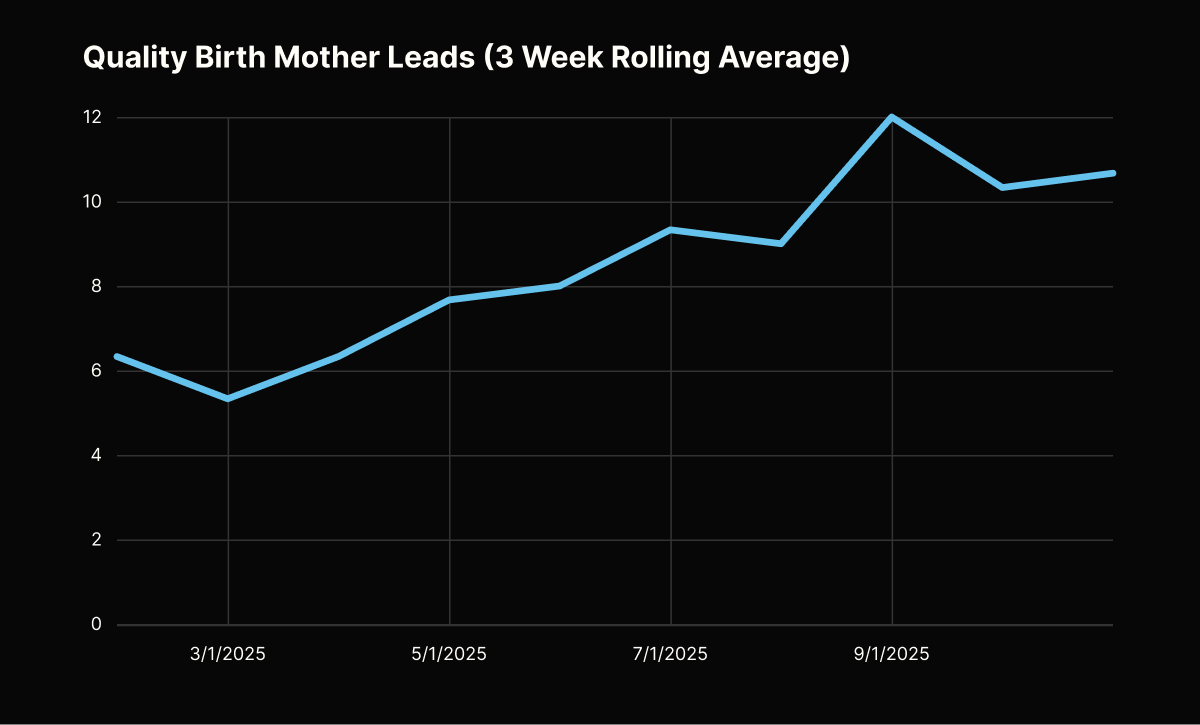
Prior to the changes, the client was generating a high volume of leads, but only a small percentage met qualification standards. After the campaign rebuild, overall lead volume remained relatively stable, while the proportion of qualified birth-mother leads increased substantially. Once the new campaigns had time to stabilize, we saw meaningful improvements across key metrics
CPA after changes (July–December 2025)
- Total leads: $32.62 CPA (24% decrease)
- Qualified birth-mother leads: $625.19 CPA (33% decrease)
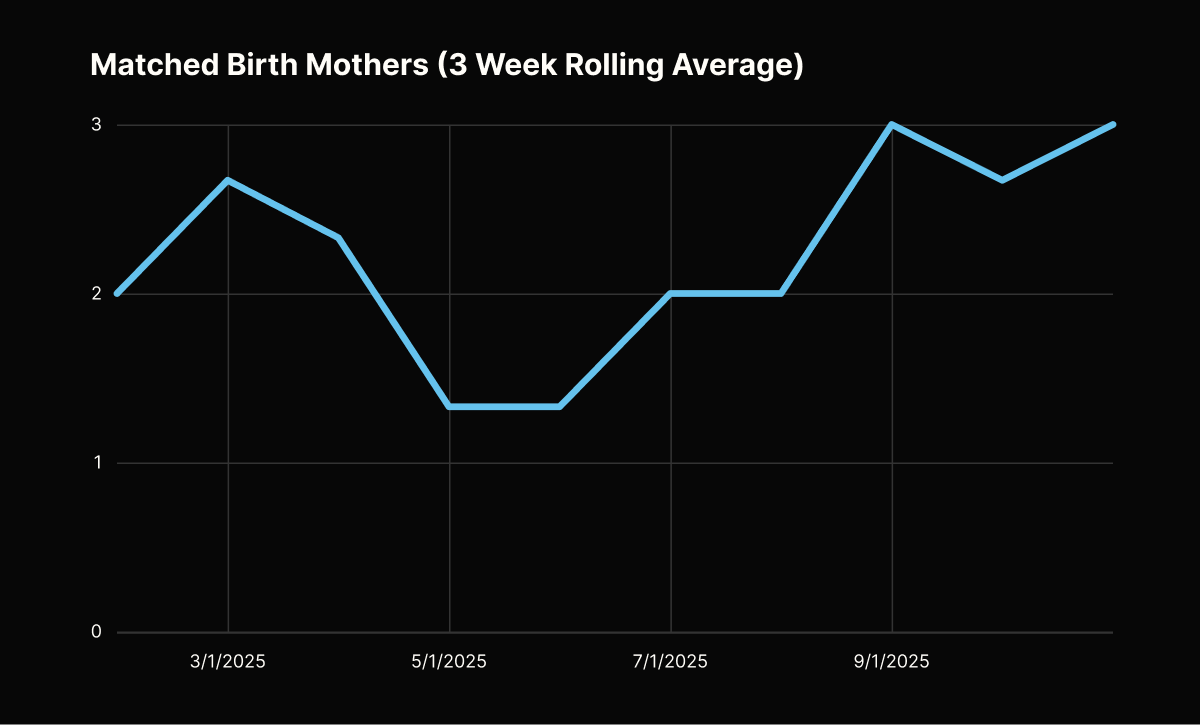
Since shifting the strategy, the client has met its birth-mother lead targets every month, and the campaigns continue to support the company’s operational needs without requiring additional budget.
The Broader Lessons
Campaigns that look strong on the surface can hide serious misalignment between performance metrics and business outcomes. When results are not supporting real-world goals, the solution is rarely to push harder on the same tactics. It requires a willingness to interrogate the data and question underlying assumptions.
From optimizing thousands of paid search campaigns, a few principles consistently hold true:
- Audience intent drives meaningful performance: Lead volume alone is not a measure of success.
- Keywords signal who you are for: Using consistent, intentional language across all touchpoints helps customers understand that your product or service is for them.
- Messaging alignment compounds results: When ads, keywords, and landing pages reinforce one another, platforms learn faster and users convert with greater confidence.
Our work with A Baby Step Adoption Agency illustrates what happens when campaigns are built for a clearly defined audience and every element, from creative to targeting to conversion tracking, works together as a cohesive system. That clarity helps platforms optimize more effectively and gives users confidence that the message is meant for them.
When results and business needs fall out of alignment, the answer is rarely more volume or incremental tweaks. It usually requires a deeper look at intent, structure, and how performance is being measured. For teams navigating that kind of shift, a more deliberate, audience-led approach can make a meaningful difference. If you’re looking to refine or rebuild your search advertising strategy, our team is here to help.