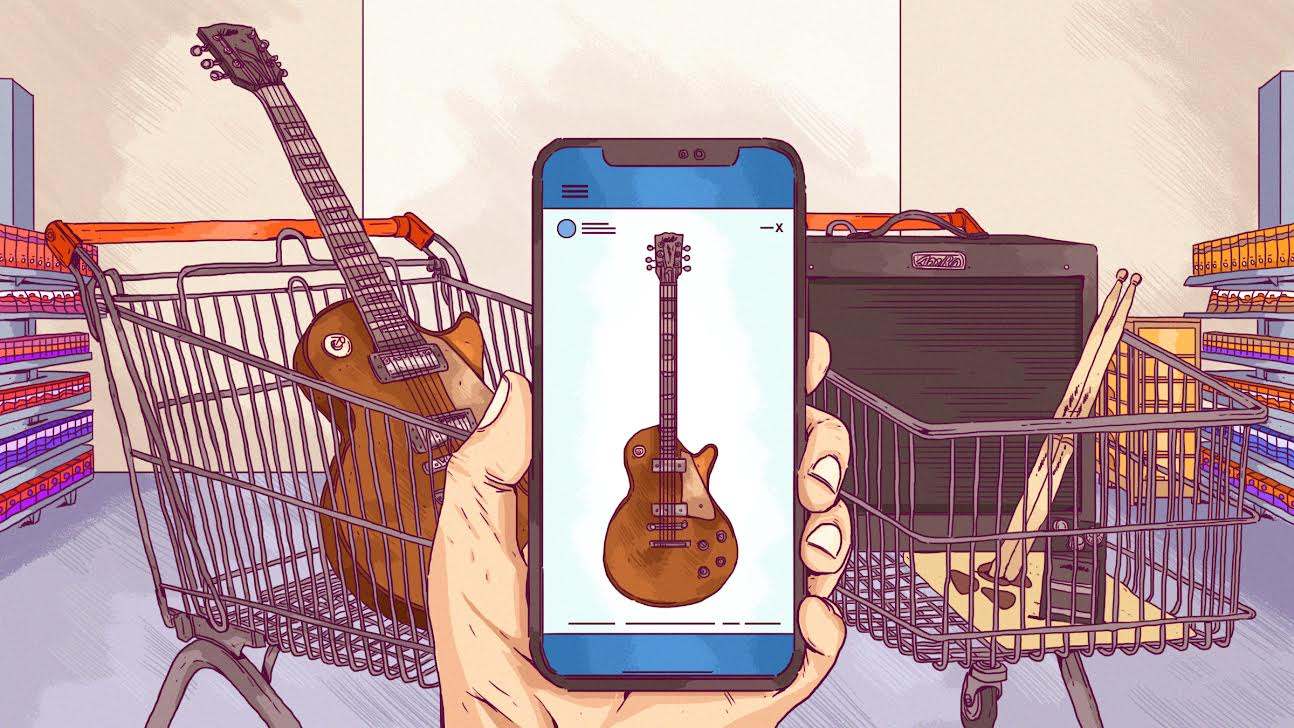
A customer walks into Russo Music, buys a $2 pack of guitar picks, and leaves happy. That is a completely valid sale. The next customer buys a Gibson Murphy Lab Les Paul for close to ten grand. Selling both of those to the same audience, profitably, through the same ad account, is the puzzle we spent months working out.
Russo is an independent, family-owned music retailer with a deep, curated catalog for players at every level. They brought us on to run their ecommerce marketing and find the level of ad spend that would grow the business without eating the margin. Their industry is ruled by behemoths like Sweetwater and Guitar Center, and almost every product they sell is bound by manufacturer minimum advertised pricing. Everyone sells the same guitar at the same price on the same margin, and that is before a dollar goes to advertising.
The behemoths absorb this with sheer volume, spending aggressively to acquire customers because, across thousands of orders a week, enough people buy the expensive guitar to carry everyone buying a strap. Russo does not have that volume to average against, so a handful of low-value orders can't quietly be offset by one big one. Each order matters on its own.
The problem that hid in plain sight
We opened with a familiar setup: a handful of Meta campaigns running on a maximize conversions goal, which asks Facebook to bring in as many purchases as it can at the lowest cost. It worked. Orders came in, average order value (AOV) and return on ad spend (ROAS) hit their marks, and the early read was that we had this figured out.
Then it started to wobble. A few months in, the campaigns stopped hitting targets with any consistency, even in weeks when total orders were up. We looked closer and the pattern revealed itself: the good stretches were riding on one or two big-ticket sales landing at the right moment, and the flat stretches had no big orders. We were, in effect, hoping a $10,000 guitar order would show up each month to rescue the numbers. For a business that lives on thin margins, hope is not a plan you want to depend on.
Meta was quietly working against us
We pulled apart the Meta campaigns and the Shopify sales side by side, and the problem had a couple of layers. Average order value was being held up by a small number of large purchases that had grown less and less frequent. In a month with a high volume of orders, AOV would look fine but because the cost to win each of those orders kept climbing, our ROAS took a hit.
The culprit was Facebook's own optimization. When you ask the platform for the most conversions at the lowest cost, the fastest path it finds is cheaper products, since a $20 strap is an easier, quicker sale than a $2,000 guitar. Left alone, it was a race to the bottom. Meta counted every cheap order as a win, and kept chasing more of them. Growing our way out on volume wasn’t an option, because that would mean spending more than competitors who can outspend us at an unimaginable scale.
The fix that should have worked
The clean hypothesis was to flip the goal. Instead of max conversions, we tested max conversion value, which tells Meta to optimize for highest AOV at the lowest cost. On paper it solves everything: bigger orders, steadier AOV, and no more praying for a lucky guitar sale.
It didn't hold up. Running the same New Arrivals ads both ways, the difference was stark:
- Max volume: $81 CPA, $428 AOV, 5.95 ROAS
- Max value: $237 CPA, $767 AOV, 3.24 ROAS
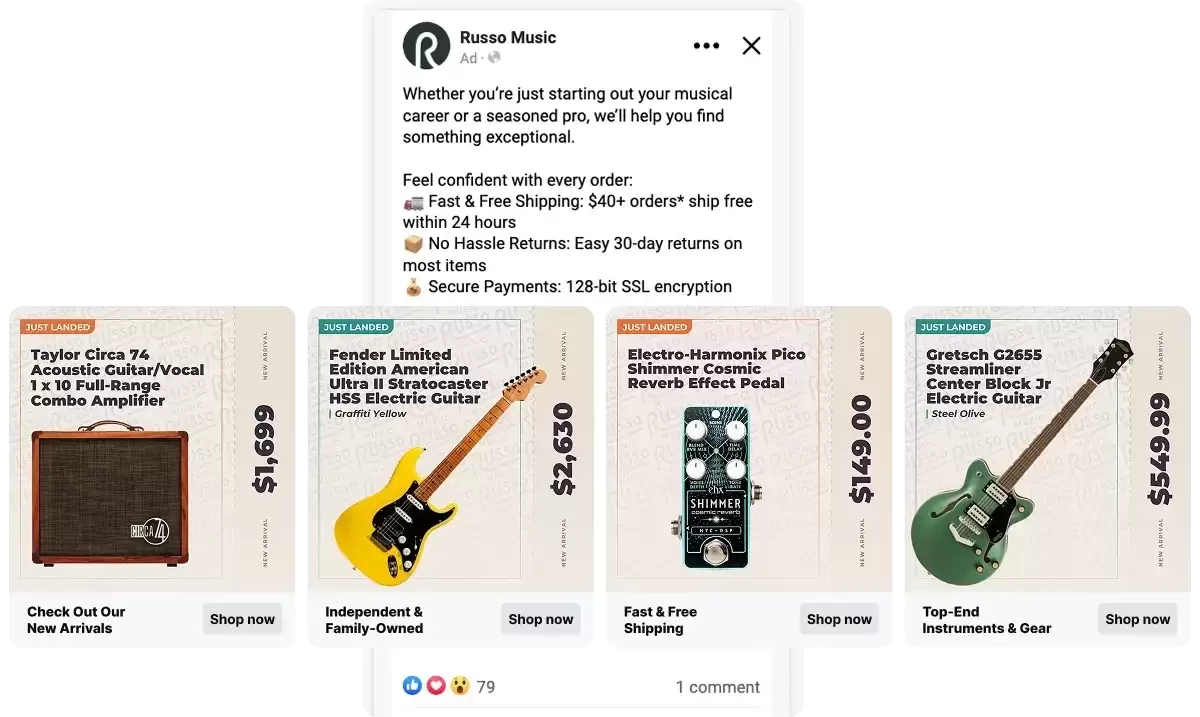
Average order value nearly doubled, exactly as promised. The cost to land those orders almost tripled, though, because a big-ticket purchase takes more convincing, and cutting out the small daily sales left us leaning even harder on the expensive ones. Higher AOV, worse return. We had an answer, but not a solution.
Rigging the game in our favor
If value wasn't the answer, volume had to be. The work was keeping it from collapsing into the cheap-sale spiral all over again, which came down to three moves.
- We returned our conversion campaigns to a max volume goal and refreshed the creative.
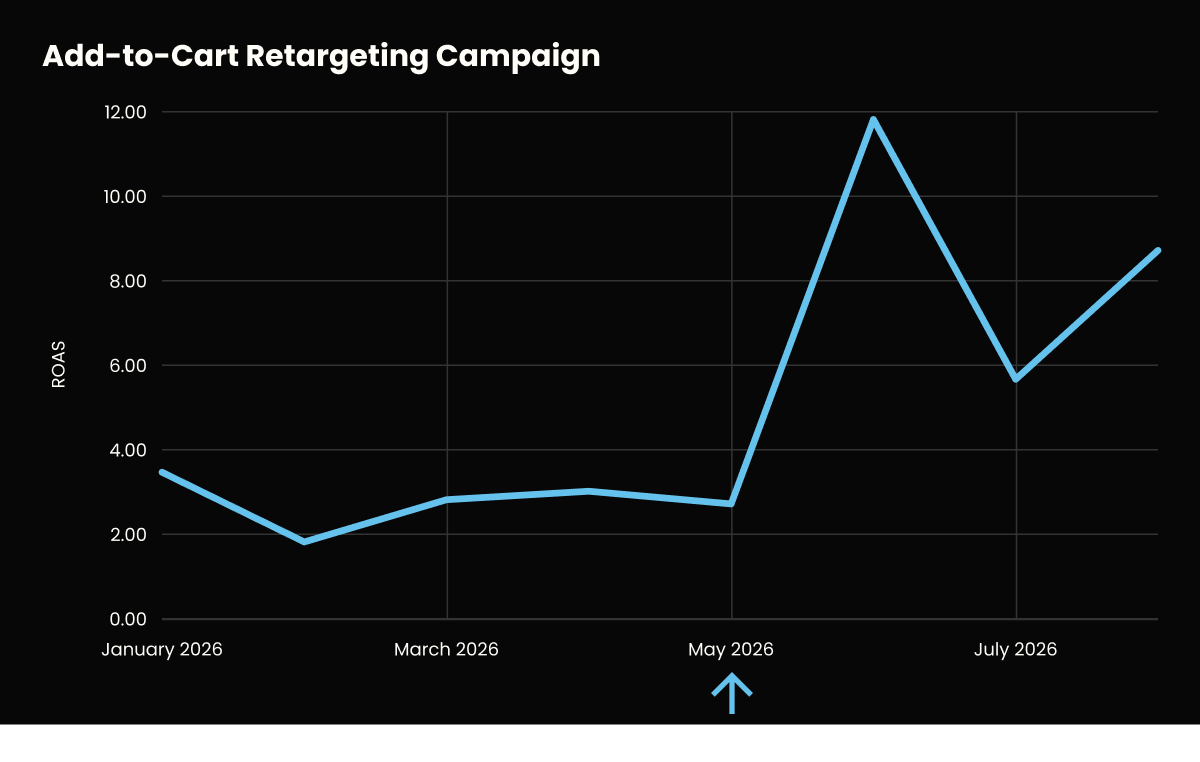
- We set a $100 product-cost minimum on the Add-to-Cart retargeting campaign, so it would only retarget orders that were worth the cost. In its first month it returned 11.8 ROAS.
- We swap in fresh ads every week on the manually built campaigns, hand-picking gear we know musicians love to click: the boutique synth covered in knobs, the one-of-a-kind vintage find. The constant churn keeps Meta from optimizing back toward cheap sales, and even the clicks that don't convert send people browsing, adding to cart, and into the retargeting loop where the real purchase happens.
Tip: You will never win an argument with the algorithm. Change what you feed it, and it changes its behavior for you.
The results: steadier, more predictable revenue
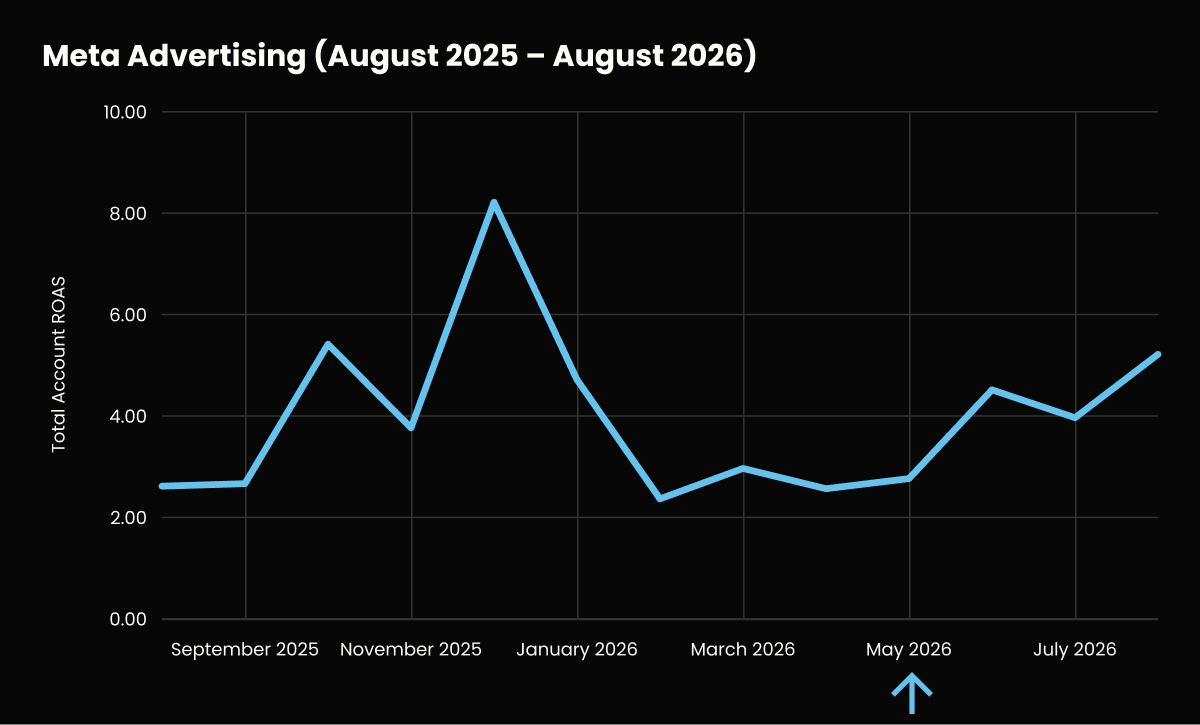
The retargeting campaign shows it clearest. In the first month with the $100 floor, average order value jumped almost 5x and return on ad spend came in at three times Russo's target. It hasn't dropped back below target since.
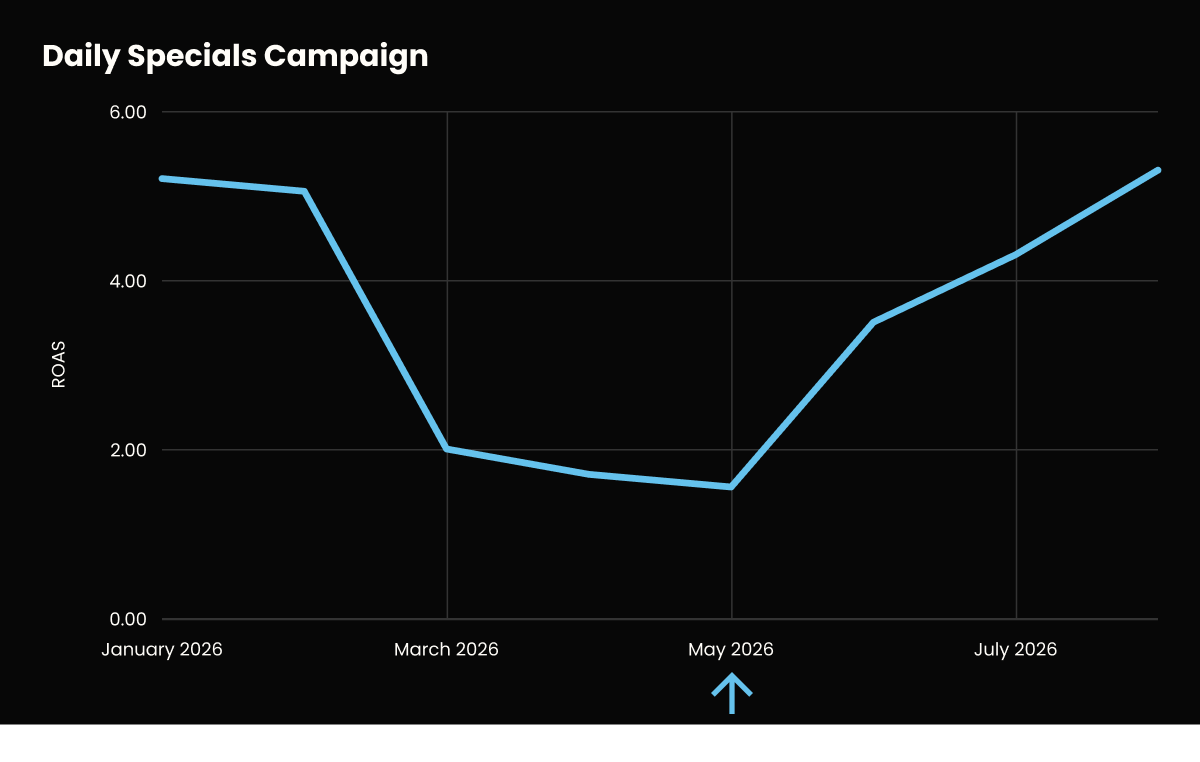
Daily Specials moved the same way, its return climbing nearly 5x over three months once it was on max volume with fresh creative.
And across the account, the month-to-month swings calmed down and we stopped living or dying by whether one big sale came through.
What Russo taught us
The lesson wasn't volume or value in the abstract. It was a sweet spot in the middle, where orders are big enough to stay profitable against stiff competition but not so big they're hard to close. Sit in that mid-range on AOV and the ROAS targets fall into place. Drift too far in either direction and they slip away.
The other takeaway is about control. You can't stop Meta from optimizing toward cheap conversions, but you can break its learning cycle and reset the inputs when its instincts start working against you. And an ad doesn't have to close the sale to earn its keep. Sometimes its whole job is getting the right person onto the site with one dream item in their cart, so you can bring them back for the purchase that moves the needle.
Underneath all of it is a simple truth about size. Russo will never outspend Sweetwater or Guitar Center, and trying to play their game, broad and hands-off, is how a smaller shop bleeds money. What worked was playing a different one, built on the things that make Russo worth choosing in the first place. If your own campaigns look healthy on the surface while the profit lags behind, we're happy to take a look.